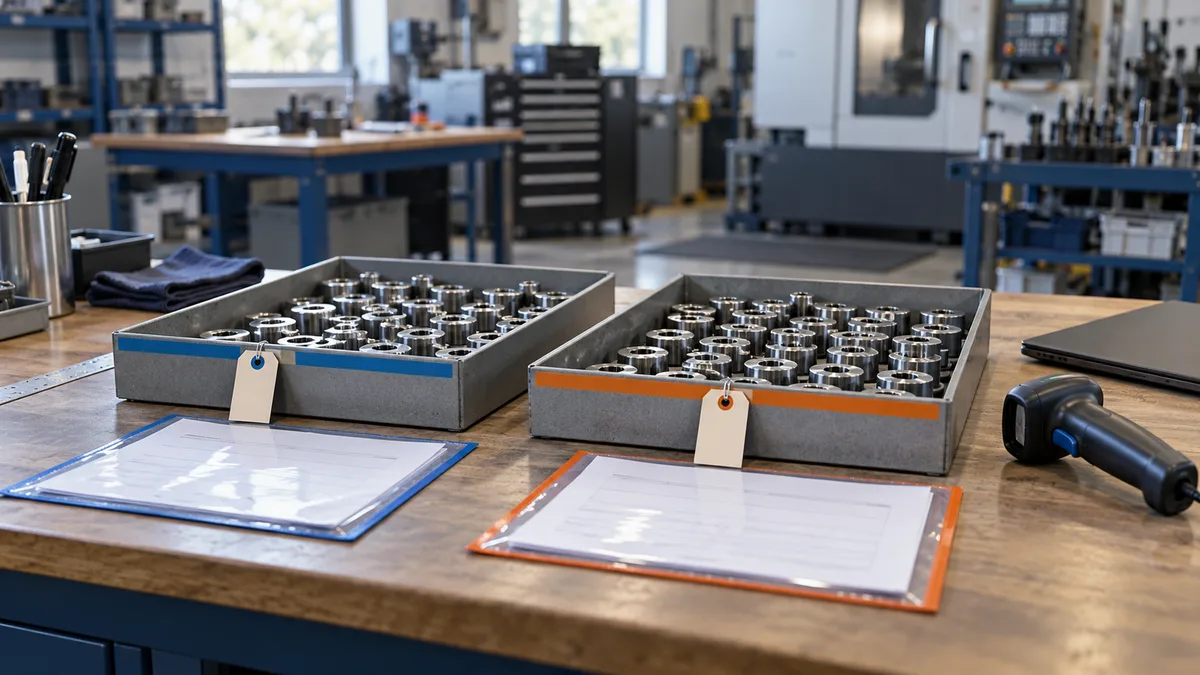
 Lot identity
Lot Tracking Software: Same Code, Different Suppliers
Two material sources use the same lot text. Test whether receiving, scanning, stock holds, and trace reports preserve the evidence of each origin.
Check your lot identity rules →Practical manufacturing technology
Clear advice for manufacturers replacing Excel sheets, paper records, and WhatsApp updates with practical systems for production, inventory, job cards, orders, and reporting.
Build dependable item records, stock movements, and material planning.
Inventory guide · MRP setupConnect job cards, work in progress, and the reports your team needs.
Job cards · WIP trackingHelp buyers understand your products, factory capabilities, and enquiry process.
Manufacturing website developmentLatest insights
Written for factory owners and managers who want straightforward improvements without a complicated ERP rollout.
No guides match your search. Try a shorter term, or ask us about your requirement.
Lot identityTwo material sources use the same lot text. Test whether receiving, scanning, stock holds, and trace reports preserve the evidence of each origin.
Check your lot identity rules → Returnable packaging
A tote returns empty, then arrives carrying fewer parts. Use a worked reconciliation to keep reusable packaging separate from material stock.
Reconcile your packaging flow → Private RFQ files
Two buyers upload files with the same name. Test who can retrieve the originals, previews, and notification links before accepting an RFQ upload workflow.
Review your RFQ file workflow → Shared production records
Use an 80-piece job to test a new production report and an older correction together. Keep both accepted changes explainable without losing shift updates.
Test your shared WIP updates → Temporary capacity
One extra shift interval should not become permanent capacity. Use a worked calendar test to check expiration, copied jobs, and schedule revisions.
Test your calendar changes →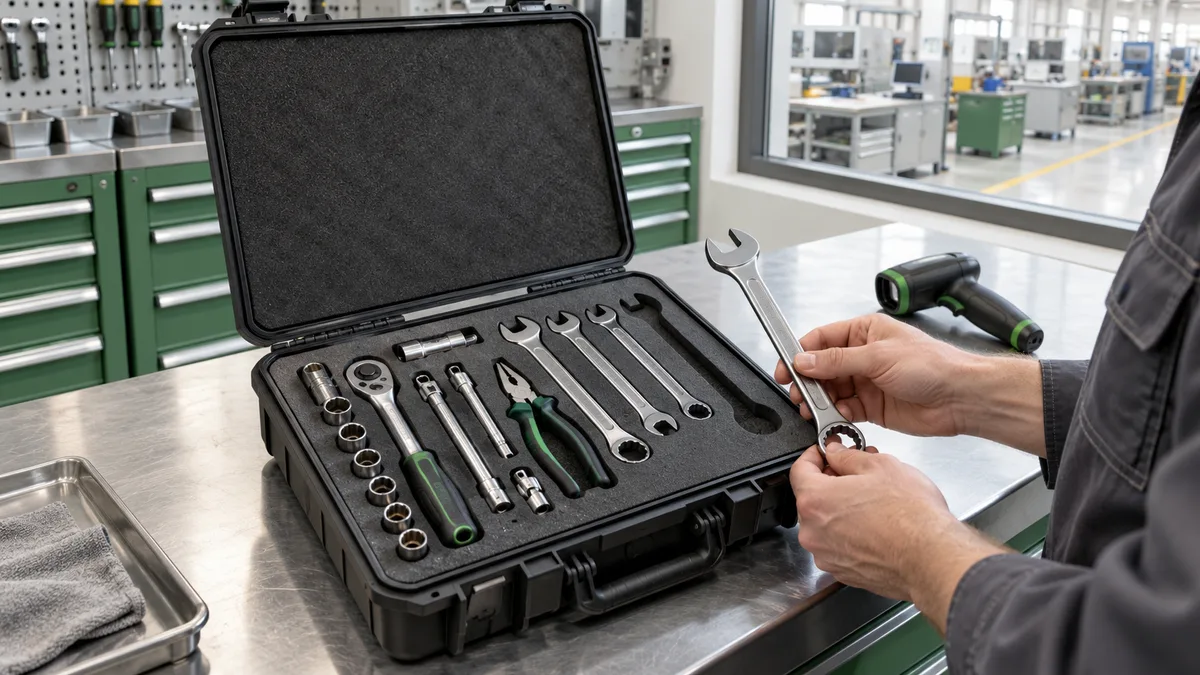 Tool-kit returns
Follow a six-tool kit through a partial return, a borrowed component, and an approved replacement. Keep the original checkout explainable.
Check your kit returns → Dashboard reliability
An empty alert list can hide a missing data source. Use a worked outage-and-recovery test before trusting a factory-wide all-clear.
Test your dashboard → Public product downloads
Follow a product-sheet revision from approval to public download. Test old links and returning visitors, then preserve the buyer document reference.
Review your download release → Supplier response control
Follow one purchase order through an outdated reply, a split-delivery proposal, and final confirmation. Test which version the supplier actually accepted.
Check your PO confirmation → Corrective-action effectiveness
Separate a completed corrective action from evidence that it worked. Follow a factory review through missing production evidence and a recurring defect.
Test your effectiveness review → Negative stock investigation
Trace negative stock through three worked examples: a late receipt, a wrong-bin posting, and a duplicate issue. Correct the cause without hiding the history.
Investigate negative stock → Website quote requests
Use an interrupted quote-request example to check receipt, attachment status, safe retries, and the receiving team's evidence.
Check your RFQ flow → Factory handoff rehearsal
Rehearse a receiving-to-production handoff with ordinary user roles, visible interventions, and evidence for a scoped go-live decision.
Test your factory handoff → Supplier delivery scores
Audit four supplier delivery schedules to explain how promise-date rules and missing receipts change an on-time score.
Audit your supplier scores → Maintenance follow-up
Follow one completed inspection and two unresolved findings through ownership, spare dependencies, verification, and work-order closure.
Review your follow-up workflow → Purchase order balances
Work through a partial factory delivery, an inspection hold, and an approved cancellation without losing the open purchase balance.
Check your partial deliveries → BOM revision changes
Test a mid-production BOM revision with a worked job split, unused-material return, and a checklist that keeps completed history intact.
Test your BOM change process →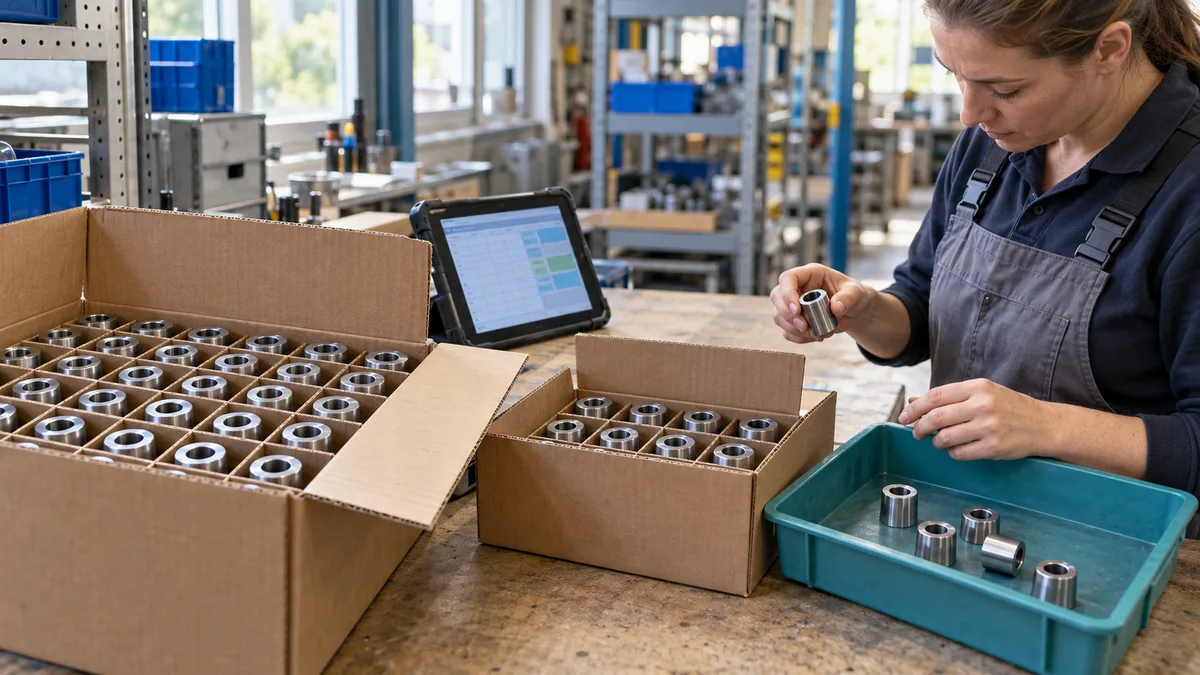 Inventory units
Follow changing supplier pack sizes, partial issues, and unused returns without letting a new unit conversion rewrite old stock records.
Check your pack conversions →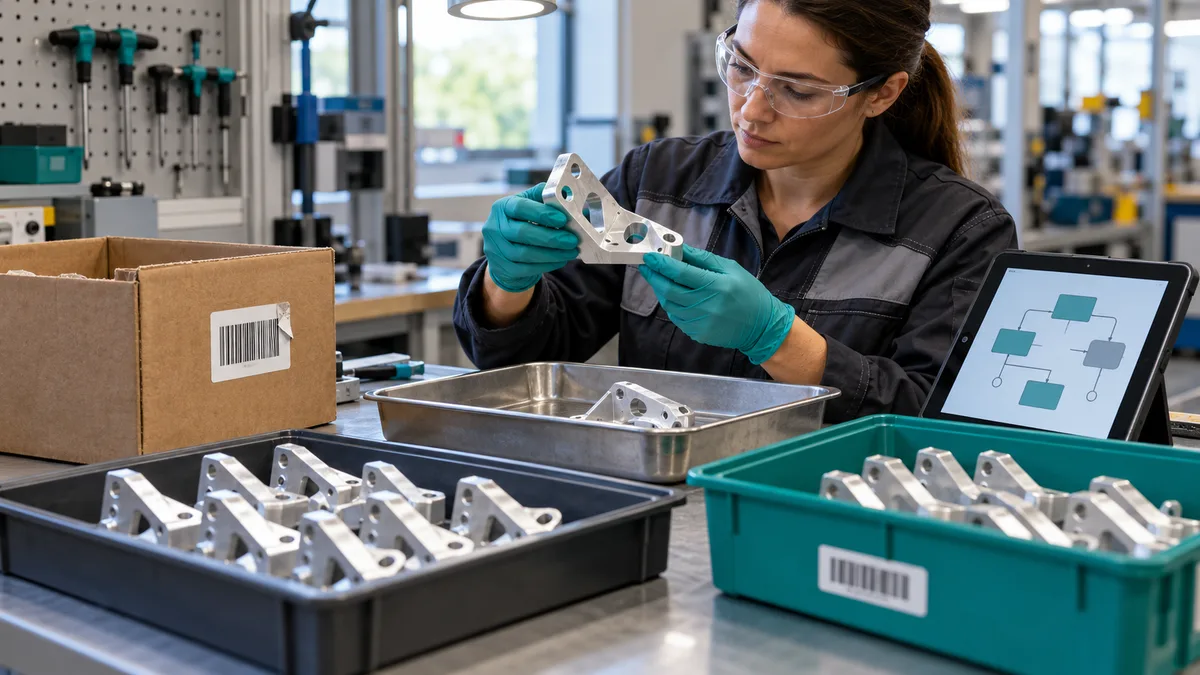 Lot tracking
Trace a returned part without guessing its lot: follow a mixed shipment, partial identification, and the evidence a supplier should demonstrate.
Test your returns workflow → Capability pages
Turn a vague capability page into a useful buying decision with a worked content example, claim approvals, and a practical review checklist.
Plan your capability page → Stock reservations
Test whether two jobs can claim the same material, then follow partial issues and cancellations without losing the stock balance.
Test your stock reservations → Dashboard reconciliation
Trace a conflicting output total back to its events, time boundaries, and refresh history before deciding which report to trust.
Reconcile your output reports → OEE data checks
Compare OEE scores with actual output, then test whether changed calendars or cycle-time settings explain an apparent improvement.
Check the OEE example →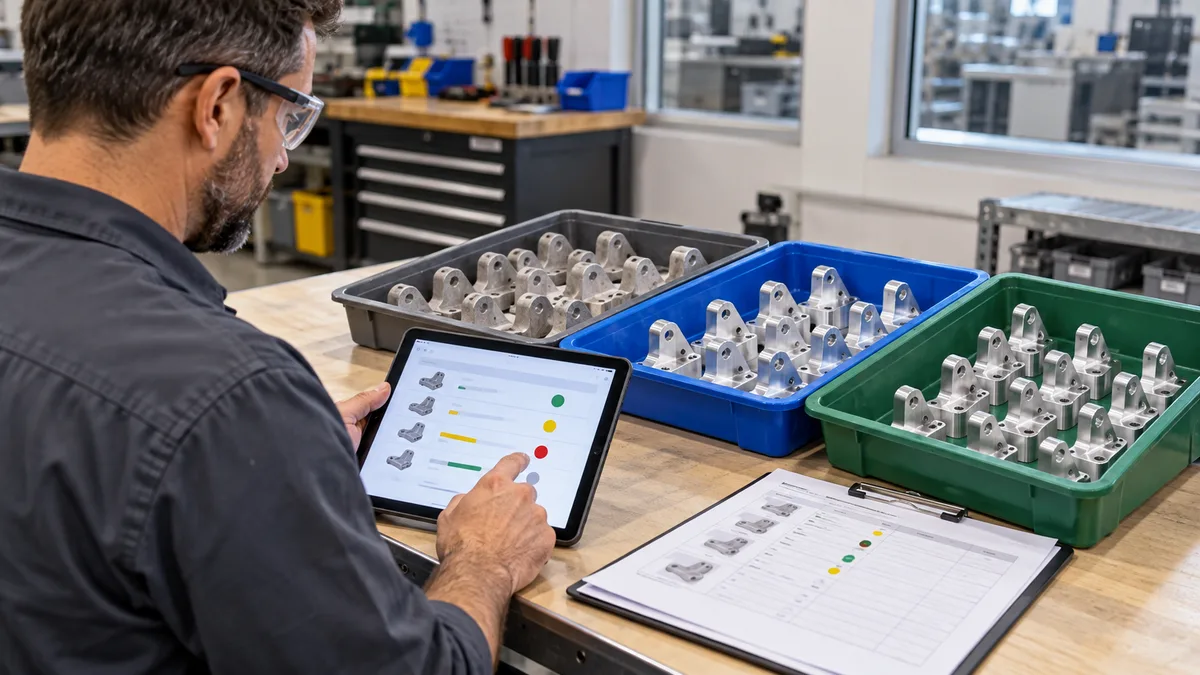 WIP quantities
Follow a 100-piece job through partial transfers, holds, and rework, then use the same quantity checks in your software demo.
Read the WIP quantity guide → Cloud ERP continuity
Test lost confirmations, controlled fallback work, recovery ownership, and usable job-history exports before choosing a cloud ERP.
Read the cloud ERP guide →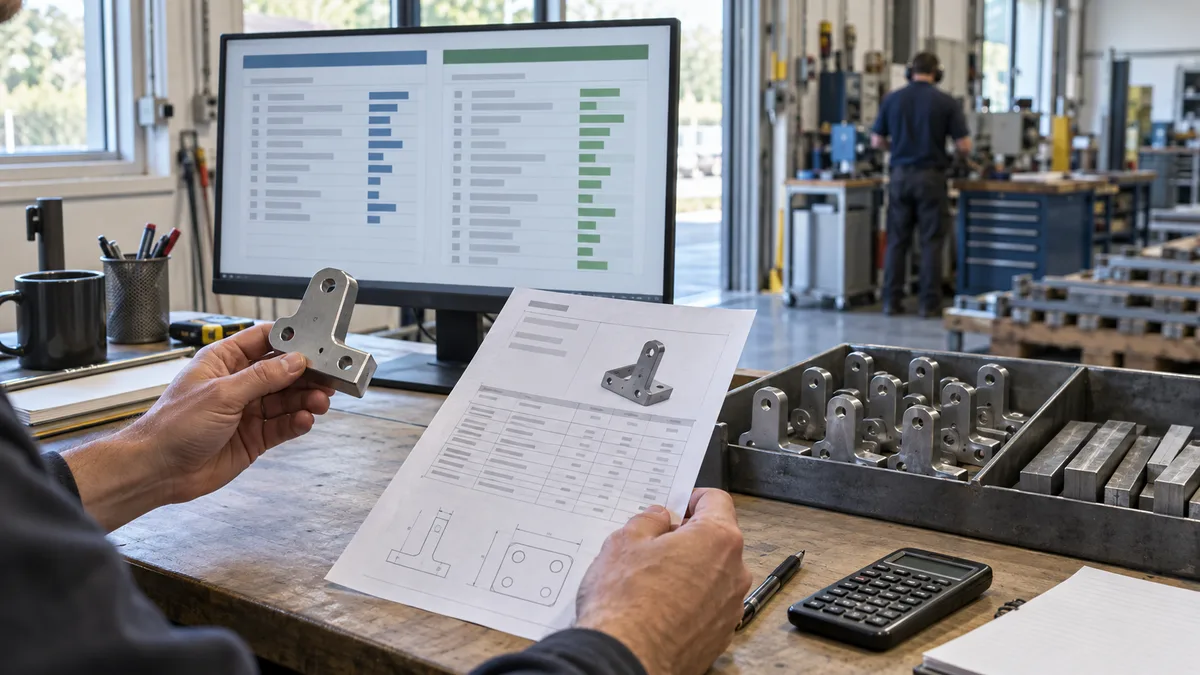 Job-cost reviews
Compare a frozen job estimate with recorded inputs, reconcile a worked example, and test missing costs, returns, and duplicate entries.
Read the costing guide →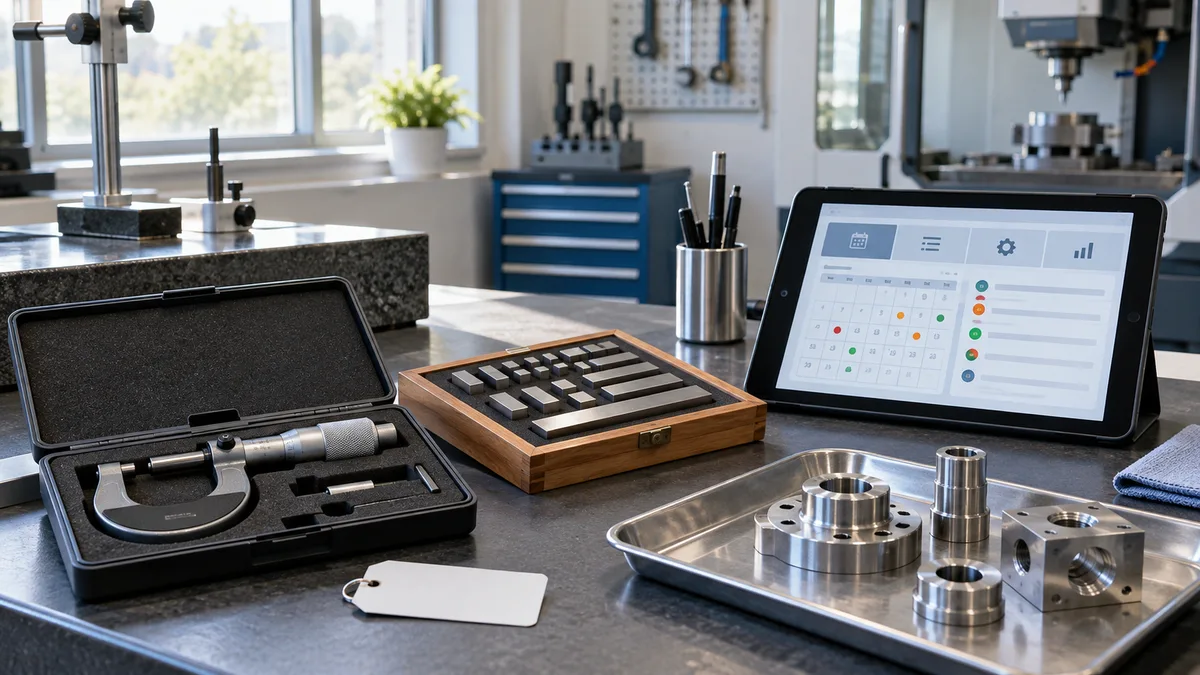 Calibration workflows
Test calibration schedules, evidence review, instrument release and earlier-use investigation with a focused factory software pilot.
Read the calibration guide → Customer portals
Plan a customer order-status portal with clear access boundaries, partial-shipment updates, approved documents, and a practical pilot checklist.
Read the portal guide → Downtime tracking
Track one stoppage across shifts and changing reasons without double-counting minutes. Test signal gaps, corrections, and clear handover.
Read the downtime guide → Data migration
Prepare item mappings, reconcile opening stock, preserve unfinished work, and rehearse the switch before starting live factory transactions.
Read the migration checklist → Quality workflows
Follow a split-lot example from a quality hold through partial rework, release approval, quantity reconciliation, and verified closure.
Read the quality workflow guide → Production scheduling
Test one bottleneck with a worked capacity example, setup rules, material holds, urgent orders, and partial completion.
Read the scheduling guide → ERP integration
Choose one factory software connection, map record ownership, and test duplicates, delayed updates, rejected data, and recovery.
Read the ERP integration guide →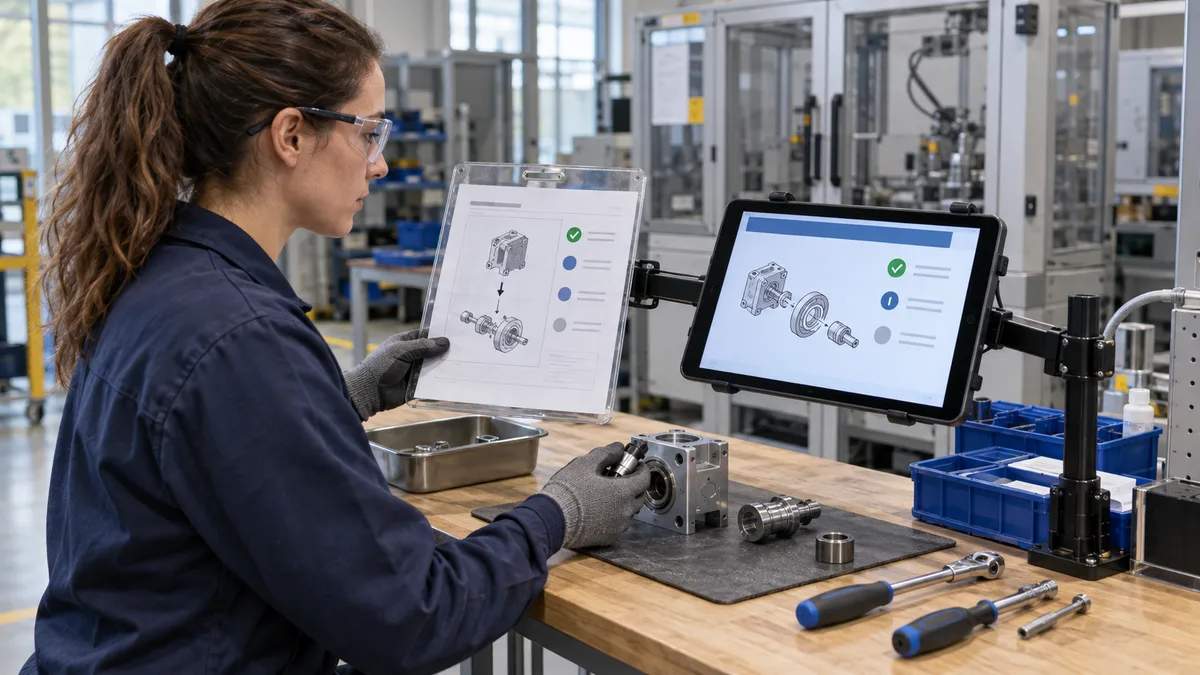 Document control
Test approved instructions, job-specific revisions, printed copies, offline access, and document history at the actual workstation.
Read the document control guide → Manufacturing CRM
Test enquiry capture, account identity, qualification, ownership, follow-ups, evidence-based stages, and RFQ handoff.
Read the manufacturing CRM guide → Manufacturing quotes
Test RFQ completeness, drawing revisions, assumptions, approvals, proposal issue, customer acceptance, and production handoff.
Read the quoting workflow guide → Tool tracking
Test individual tool identity, checkouts, returns, condition holds, reservations, and transfer history in a small tool-room pilot.
Read the tool-checkout guide → Manufacturing websites
Prepare capability pages, content evidence, quote requests, ownership questions, and practical tests before launching your factory website.
Read the website planning guide → Barcode inventory
Test item mapping, pack quantities, inspection holds, bin locations, and duplicate receipts with a practical receiving checklist.
Read the barcode receiving guide → MRP software
Connect demand, BOMs, usable stock, open supply, lead times, net requirements, and daily planning actions.
Read the MRP setup guide → WIP tracking
Control stage quantities, material handoffs, quality status, ageing, rework, and finished-goods transfer.
Read the WIP tracking guide → Stock control
Plan cycle counts, control movements, investigate variances, approve adjustments, and improve factory stock records.
Read the stock-control guide → OEE software
Build trustworthy availability, performance, quality, downtime, and shift records before relying on a headline OEE percentage.
Read the OEE guide → Batch traceability
Connect incoming material lots, production batches, quality status, inventory movements, finished stock, and customer dispatches.
Read the traceability guide → Preventive maintenance
Plan recurring equipment work around service triggers, production windows, people, spares, safe execution, evidence, and backlog.
Read the maintenance guide → Subcontract tracking
Control material sent outside, supplier operations, due dates, partial returns, inspection, reconciliation, and production impact.
Read the subcontract guide → Supplier deliveries
Track line-level commitments, dispatches, partial receipts, quality status, production impact, and expediting ownership.
Read the supplier guide → Purchase requisitions
Control internal purchase requests with clear specifications, stock checks, need-by dates, approvals, buyer handoff, and visible status.
Read the requisition guide → Factory dashboards
Build a compact daily view around delivery, production, material, quality, trusted definitions, exceptions, and clear ownership.
Read the dashboard guide → ERP selection
Compare process fit, configuration, implementation effort, integrations, upgrades, data control, support, and long-term ownership.
Read the ERP comparison → Material shortages
Find material risk early by connecting dated demand, usable stock, reservations, incoming supply, affected jobs, and action ownership.
Read the shortage guide → Production planning
Build a usable daily schedule from customer demand, material readiness, realistic capacity, job priorities, and shop-floor progress.
Read the planning guide → Quality inspection
Record incoming, in-process, and final checks with revision control, traceability, clear status, and practical exception handling.
Read the quality guide → Software selection
Choose around real factory problems, essential workflows, adoption, total effort, and a practical first implementation phase.
Read the buying guide → Inventory management
Improve stock accuracy, material planning, traceability, purchasing, and working-capital control with a practical inventory system.
Read the guide →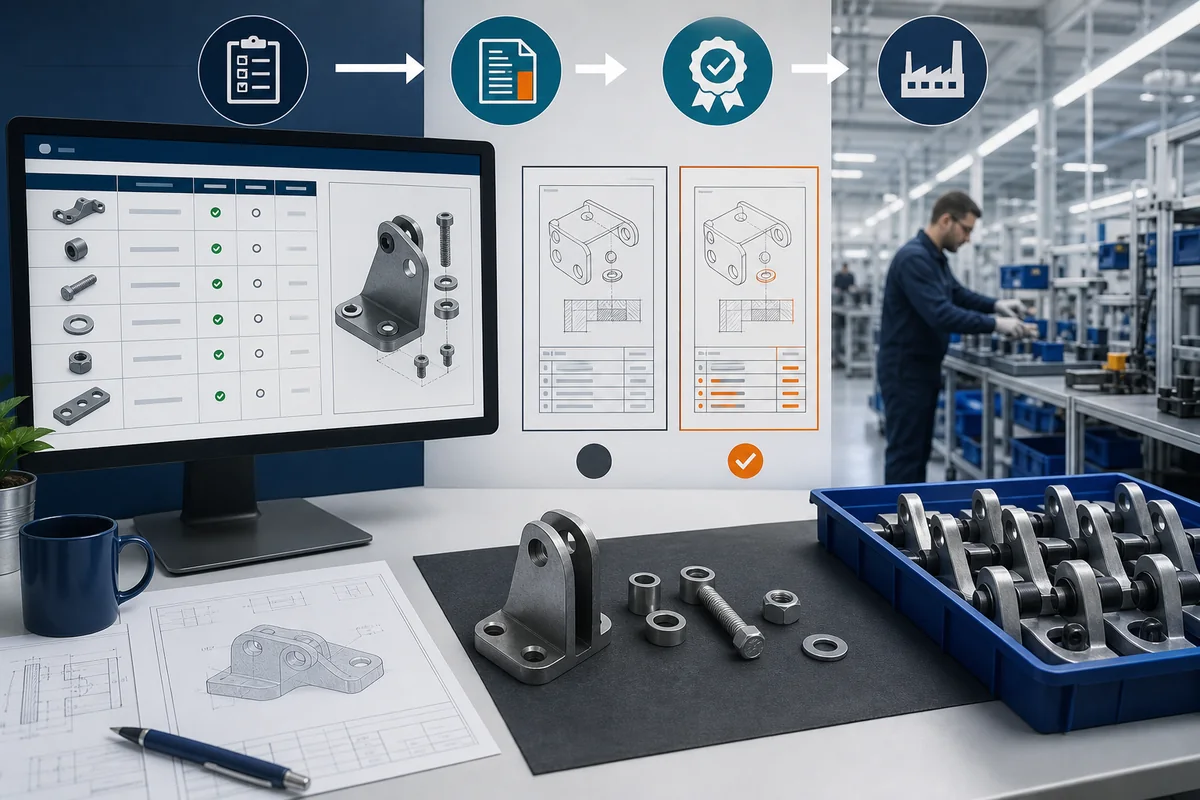 BOM control
Keep purchasing, stores, production, and quality aligned with the correct parts, drawings, approvals, and engineering changes.
Read the guide → Factory dashboards
Track output, WIP, cycle time, downtime, quality, material use, productivity, and delivery without building an oversized dashboard.
Read the metrics → Factory digitization
Learn which processes to digitize first, what features matter, and how to move beyond disconnected spreadsheets without disrupting daily production.
Read the guide → Excel to software
A practical checklist for deciding when spreadsheets are slowing production, inventory, order tracking, and reporting.
Read the checklist → Production control
See how digital job cards give owners and supervisors clearer work status, responsibilities, delays, and delivery dates.
Read the guide →